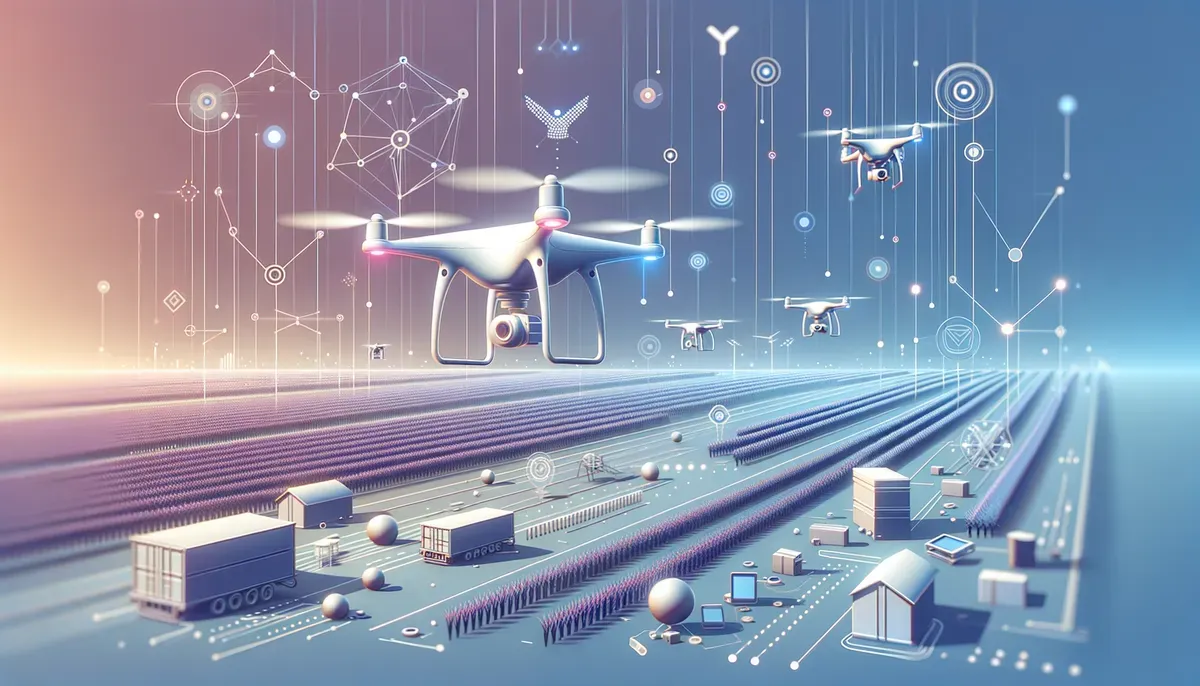
Introduction to Agricultural Drones
In the ever-evolving world of agriculture, agricultural drones for large farms have become essential for boosting productivity and efficiency. These drones utilize AI technology to automate various farming tasks, including crop monitoring, spraying, and field mapping. With the pressure on farmers to increase yields while managing costs, adopting smart drones for farming is now a necessity rather than a luxury. A recent collaboration between DroneDash Technologies and GEODNET to form GEODASH Aerosystems highlights this trend, promising advancements in drone technology specifically tailored for large industrial farms.
Impact of AI on Farming Technology
The integration of AI in agricultural drone applications has revolutionized traditional farming methods. AI algorithms empower drones to process vast amounts of data in real time, facilitating better decision-making and timely interventions. For instance, drones equipped with AI can analyze crop health, pinpoint pest infestations, and optimize irrigation practices. This capability not only saves time but also minimizes resource wastage, leading to more sustainable farming practices.
Meanwhile, automated drone operations for large farms can significantly reduce labor costs. By employing efficient drone flight planning for farms, farmers can schedule multiple tasks—such as spraying pesticides or fertilizers—without needing constant manual oversight. This level of automation frees farm managers to concentrate on strategic decisions rather than day-to-day operational tasks.
Top Agricultural Drones for Large Farms
When evaluating the best agricultural drones for large farms, several models stand out due to their impressive capabilities and features. Below is a comparison of some leading options available in 2026:
| Drone Model | Key Features | Pricing | Best For |
|---|---|---|---|
| GEODASH Aerosystems Sprayer | Automated flight planning, real-time crop monitoring | $30,000 | Large industrial farms |
| DJI Agras T30 | 30L payload, 7 km flight range, AI-powered analytics | 5,000 | Medium to large farms |
| Parrot Bluegrass Fields | 4K camera, multispectral sensors, easy-to-use app | $5,000 | Small to medium farms |
| senseFly eBee X | Long endurance (up to 90 min), customizable payloads | 5,000 | Precision agriculture |
The GEODASH Aerosystems Sprayer is particularly noteworthy, as it eliminates the need for prior field mapping, simplifying the process for farm managers. Its automation capabilities handle large-scale operations efficiently, making it ideal for expansive agricultural landscapes.
How to Choose the Right Drone for Farming
Selecting the right drone for your farming needs involves several key considerations:
- Farm Size: Larger farms may benefit from drones like the GEODASH Aerosystems Sprayer, which is designed for extensive coverage and efficiency.
- Intended Use: Determine whether the primary function will be crop spraying, monitoring, or mapping. Some drones offer greater versatility than others.
- Budget: Pricing varies significantly, so it’s crucial to establish a budget and weigh the long-term return on investment. Higher initial costs may be offset by increased efficiency and reduced labor expenses over time.
- Ease of Use: Look for drones with user-friendly interfaces and robust customer support, especially important for farmers without a technology background.
- Regulatory Compliance: Ensure that your chosen drone complies with local regulations regarding agricultural drone operations.
Future Trends in Agricultural Drone Technology
The future of drone technology for crop spraying appears bright, with several emerging trends:
- Increased Automation: As AI technology advances, drones will become even more autonomous, requiring less human intervention.
- Data Analytics Integration: Future drones will likely incorporate advanced data analytics to provide deeper insights into crop health and yield predictions.
- Sustainability Focus: With sustainable agriculture gaining prominence, drones will play a crucial role in minimizing chemical use and optimizing resource allocation.
- Enhanced Connectivity: Integrating IoT (Internet of Things) will enable drones to communicate with other farm equipment, creating a more connected and efficient farming ecosystem.
The Role of Drones in Modern Agriculture
As the agricultural sector confronts challenges such as climate change, labor shortages, and the need for enhanced productivity, agricultural drones for large farms offer a viable solution. The emergence of advanced models like the GEODASH Aerosystems Sprayer demonstrates how AI technology is reshaping farming practices. By automating operations and providing critical data insights, these drones are not just tools but essential components in the future of agriculture.
For farm managers and agriculture technology specialists, investing in smart drones for farming represents a strategic move that can lead to improved operational efficiency and profitability. Staying informed about the latest advancements will be crucial for maintaining a competitive edge in the agricultural landscape.
Why This Matters
This development signals a broader shift in the AI industry that could reshape how businesses and consumers interact with technology. Stay informed to understand how these changes might affect your work or interests.