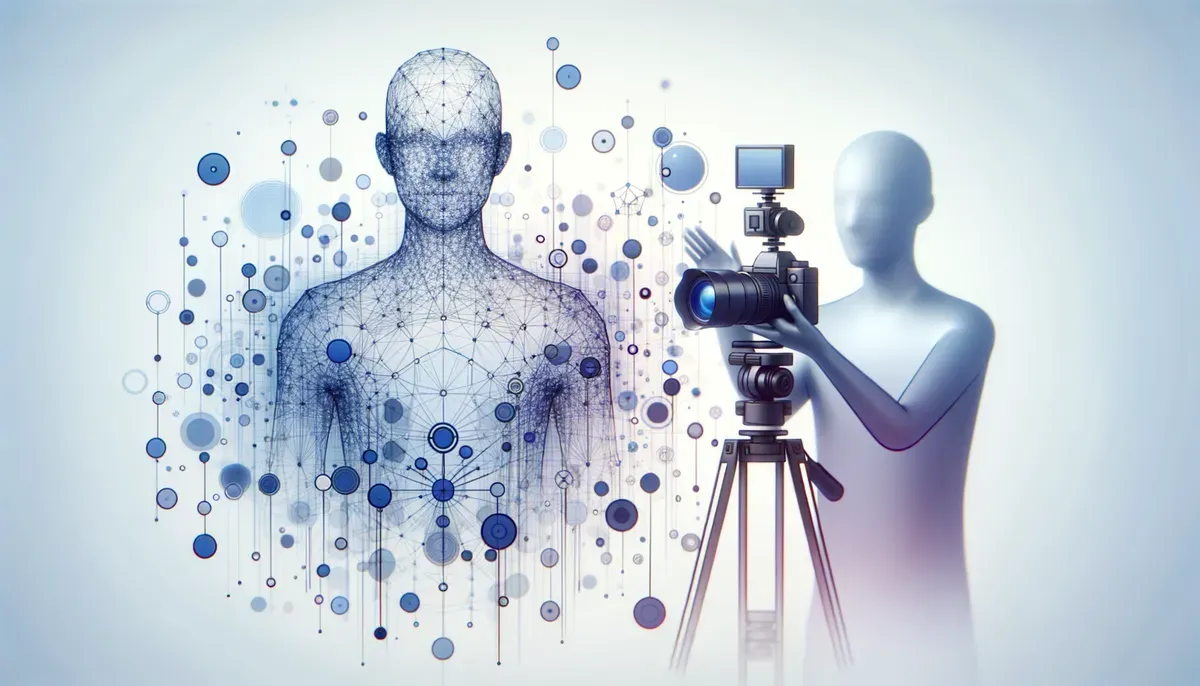
Introduction to Markerless 3D Kinematics

Markerless 3D kinematics is transforming how we analyze human motion by removing the need for cumbersome markers. This innovation allows for more natural movement capture, which is crucial for industries such as biomechanics, animation, and sports science. Are you interested in learning how to use Pose2Sim for markerless 3D kinematics? This tutorial will guide you through setting up and implementing a Pose2Sim pipeline on Google Colab, enabling advanced motion analysis without significant upfront investments in hardware or software.
Setting Up Pose2Sim on Colab
Getting started with Pose2Sim involves a few initial steps in Google Colab—a cloud-based platform for writing and executing Python code directly in your browser. To set up Pose2Sim, you'll need:
- A Google account to access Colab.
- Basic familiarity with Python programming.
Here’s how to set up Pose2Sim:
- Open Google Colab and create a new notebook.
- Install the necessary libraries, including TensorFlow and OpenSim, using this code snippet:
``python !pip install tensorflow opensim ``
- Load the Pose2Sim repository from GitHub into your Colab environment.
- Ensure you have access to any pre-trained models required for the pipeline.
This setup allows you to run simulations and analyze data without needing local resources, making it ideal for teams with limited IT infrastructure.
Step-by-Step Guide for Pose2Sim
Let’s break down the process of using Pose2Sim for markerless 3D kinematics:
- Data Input: Start with video footage of the subject performing various movements. Ensure optimal lighting and camera angles for accurate pose estimation.
- Pose Estimation with RTMPose: Utilize RTMPose for 3D pose estimation from the input video. This involves running the model on the captured frames to extract human joint coordinates in 3D space.
- Run the Kinematics Pipeline: Next, feed the estimated poses into the OpenSim framework. This allows for the simulation of dynamic movements, aiding in the analysis of kinematic data and understanding motion patterns.
- Visualization: Use OpenSim’s visualization tools to render the 3D skeleton and analyze the data from various angles. This step is crucial for presenting findings in a clear and comprehensible format.
Each of these steps can be executed seamlessly in Colab, facilitating rapid iteration and experimentation.
Calibration Techniques for Markerless Kinematics
Calibration plays a vital role in achieving accurate results in markerless kinematics. Here are key techniques to consider:
- Camera Calibration: Ensure the recording camera is properly calibrated. This includes determining the camera’s intrinsic parameters to correct for lens distortion.
- Subject Positioning: Have subjects perform specific calibration movements that cover the entire expected range of motion during data collection. This helps the algorithm better understand movement dynamics.
- Recalibration: Regularly recalibrate your system, especially when working in different environments or with different subjects, to maintain accuracy.
Implementing these calibration techniques can significantly enhance the reliability of your data, resulting in more robust analyses.
Overview of the Kinematic Pipeline Processes
Understanding the full kinematic pipeline is essential for effectively implementing markerless 3D kinematics. The typical pipeline includes:
- Video Capture: High-quality video is captured, ideally with multiple cameras for comprehensive coverage.
- Pose Extraction: RTMPose processes the video to extract 3D joint locations, creating a digital skeleton of the subject.
- Kinematic Analysis: The extracted data is analyzed using OpenSim to simulate and evaluate physical movements, assessing angles, velocities, and forces.
- Data Output: Results can be exported for detailed reporting or further analysis in other software tools.
By following this pipeline, professionals can derive meaningful insights from motion data, whether for sports performance, rehabilitation, or ergonomic studies.
Practical Applications of Markerless Kinematics
Markerless kinematics has a wide range of practical applications across various industries:
- Sports Science: Coaches and trainers analyze athlete performance using these techniques, identifying areas for improvement and optimizing training regimens.
- Rehabilitation: Physical therapists monitor patient progress by analyzing movement patterns during recovery, ensuring proper techniques are followed.
- Biomechanics Research: Researchers in academia leverage these tools for studies related to human movement, contributing to advancements in understanding biomechanics.
The flexibility of using Pose2Sim in combination with RTMPose and OpenSim makes it a valuable asset for professionals in these fields, facilitating detailed analysis without the overhead of traditional motion capture systems.
Why This Matters
Mastering AI-powered workflows gives you a competitive edge in today's fast-paced environment. These insights can help you work smarter, not harder.